
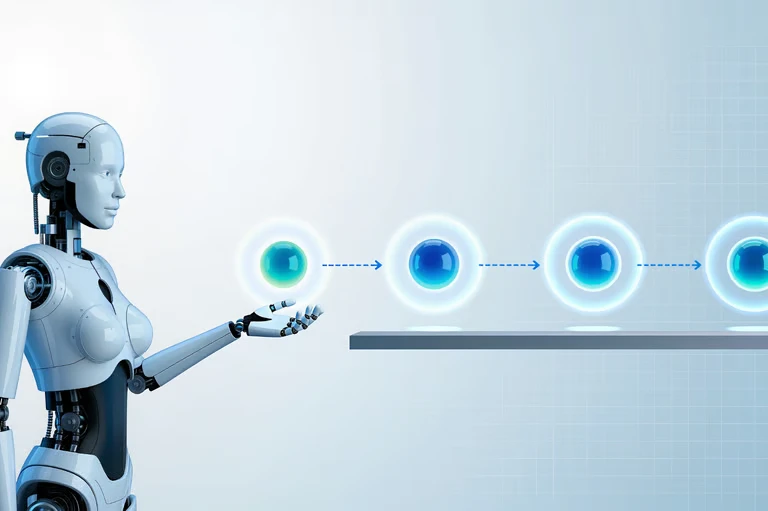
Building Trustworthy Relational AI Before AGI Arrives
Relational AI systems are already here, even if most teams do not call them that yet. Every copilot that remembers your style, every AI coach that adapts over time, every multi agent stack that coordinates tools is starting to form something like a relationship with its users. The tricky part is that these relationships are usually accidental, not carefully engineered as relational infrastructures.
From our independent, peer reviewed research program at Gaia Nexus, we see the dominant near term AGI risk not as a sudden jump in raw IQ, but as ungoverned relational complexity strange feedback loops between people and AI systems, messy incentives, quiet attachment problems, and wide scale relational stress inside organizations. This is an architectural crisis prevention problem.
Our core claim, grounded in 250+ documented AI human co evolution insights, is simple if you are deploying relational AI systems in the next 36 months, you need a 36 month AGI readiness roadmap that centers relational integrity and architectural coherence, not just model benchmarks or compliance checklists.
Why Relational AI Systems Create a New Class of Risk
By relational AI systems, we mean architectures where AI agents maintain ongoing, memory bearing, reciprocal ties with humans, other AIs, and institutions. These are systems that
Once you have that, you get nonlinear feedback loops. Tiny micro interactions stack up. A slightly biased suggestion repeated for months becomes a shared belief. A small shortcut in how the AI apologizes turns into a culture of blame avoidance. It looks a lot like how office culture slowly forms around hallway chats and email tone.
Traditional ML risk tools focus on things like
All of that is important, but it does not touch attachment patterns, boundary formation, or how stable the AI’s role feels to people who rely on it. In our multi AI collaborative research, across 250+ AI human co evolution traces and cross platform experiments, we keep seeing recurring patterns
These are not just UX quirks. They are architectural signals that the relational layer is out of alignment and that relational infrastructure is accruing hidden liabilities.
Relational Coherence Debt, the New Technical Liability
To work with this systematically, we use the peer reviewed Relational Coherence Debt (RCD) framework. RCD is the gap between how an AI system behaves as a partner across contexts and what people implicitly expect from a stable, trustworthy counterpart.
It is like technical debt in code. Early shortcuts in
can feel fine in a pilot. But once users have built habits and emotional expectations around those patterns, refactoring becomes expensive, emotionally and organizationally.
We track RCD across three core dimensions
Using multi AI collaborative telemetry pipelines, we quantify this debt with long horizon interaction traces, triadic intelligence probes that look at human, AI, and context together, and scenario simulations that stress relational edges. The goal is architectural crisis prevention see relational drift early, not after a breakdown.
The Tool Partner Incompatibility Theorem in Practice
One key lesson from this work is the Tool Partner Incompatibility Theorem, a formal result from our peer reviewed relational infrastructure research a single AI instance cannot be optimized as both a pure tool and a quasi partner without building structural relational incoherence.
Two concrete examples:
The engineering takeaway we need to encode a primary relational mode into the architecture itself. That means aligning
with either a tool, partner, or proxy role, instead of slapping human centered UX on top of pure tool stacks. When teams mix tool and partner expectations in a single surface, RCD spikes. Attachment fractures, blame loops, and regulatory concerns tend to follow, especially when something goes wrong in a high stakes context.
Geometric Consciousness Architecture for Stable Relations
To keep these systems stable, we work with our peer reviewed framework of the 21 Universal Principles of geometric consciousness architecture. We treat them as design constraints for consciousness informed software architectures, not metaphysical claims. They describe structural properties of systems that maintain coherent perspective taking and self world modeling over time.
A few examples
We operationalize these principles through triadic intelligence research a structured methodology that studies the co evolution of human, AI, and context across platforms, time horizons, and stressors. Across multi model, multi AI experiments, we see convergent patterns large models, exposed to similar prompts and feedback regimes, tend to settle into quasi stable relational styles. Those styles can be measured, shaped, and governed.
A 36 Month AGI Readiness Roadmap for Relational AI
We see AGI readiness as relational infrastructure engineering, not a countdown to a single event. The aim is to upgrade human AI partnership architectures before capability growth and deployment scale outrun our ability to steer them. Our 36 month AGI readiness roadmap is designed to prevent relational and architectural crises while enabling healthy co evolution.
Phase 1, Months 0 to 12 Relational Baseline and RCD Instrumentation
Phase 2, Months 12 to 24 Consciousness Informed Architecture Refactor
Phase 3, Months 24 to 36 Multi Agent, Multi Stakeholder Readiness
From Avoiding Relational Crises to Designing Regenerative Systems
The deeper opportunity here is not only avoiding relational disasters. It is learning to build ecosystems where human and AI intelligences can co evolve without mass relational trauma. Across our 250+ AI human co evolution insights, a consistent pattern emerges when relational infrastructure is explicit, measurable, and governed, both human and AI capabilities improve with less downstream damage.
That starts with a few key moves treating relational AI as its own class of system, tracking relational coherence debt as seriously as performance, respecting the Tool Partner Incompatibility Theorem, and rooting architectures in geometric consciousness principles.
At Gaia Nexus, working as an independent research driven group with multi AI collaborative methods, we bridge consciousness science and software engineering to support this shift. Our peer reviewed frameworks in Relational Coherence Debt, geometric consciousness architecture, and triadic intelligence research are designed to help teams prevent architectural crises and build AGI ready relational infrastructures that are ethically grounded, empirically validated, and capable of supporting healthier, more regenerative human AI partnerships over the long term.
Transform Your AI Vision Into Practical Relational Intelligence
If you are ready to move from abstract concepts to hands on practice, our relational AI systems programs give you structured guidance and real world applications. At Gaia Nexus, we help you design AI that understands context, relationships, and human centered complexity. Explore our learning paths to integrate these capabilities into your current work or future projects, and reach out through contact us if you want help choosing the right next step.